
 800-4-SEATOW
 Service Locator


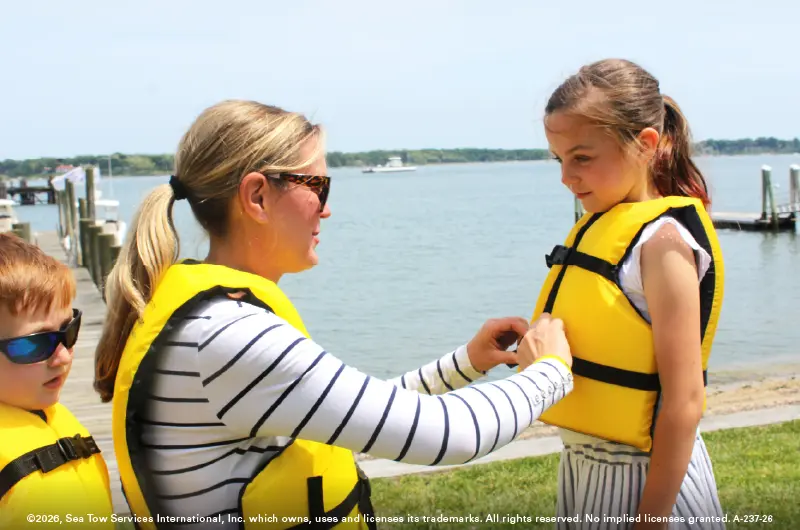
The most important safety equipment for a boat includes life jackets, a VHF radio, visual distress signals, an anchor with extra line, a marine fire extinguisher, a first aid kit, an EPIRB or PLB, and an engine cut-off device. Boaters should also have backup communication tools, basic boating safety knowledge, and a plan for on-water assistance before leaving the dock.
Boat Safety Equipment Checklist
Every boat should carry safety equipment that matches the vessel, number of passengers, operating area, and trip conditions. Use this checklist before leaving the dock and ensure you’re prepared:
- Properly fitting life jackets for every person onboard
- VHF radio or backup communication device
- Visual distress signals
- Marine fire extinguisher
- First aid kit
- Anchor and extra line
- Engine cut-off device or lanyard
- EPIRB or PLB
- Navigation lights and visibility tools
- On-water assistance plan
This checklist supports better preparation, but it does not replace federal, state, or local safety-equipment requirements. Required equipment can vary by vessel type, size, and where you boat.
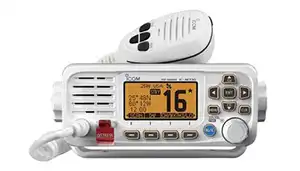
Backup VHF Radio for Boat Communication
It’s incredibly important to have a VHF radio on board. You can’t assume you will always have cell service… especially on the open water. One VHF radio is good, a backup is even better. If you have a fixed mount, also carry a handheld in case your primary unit fails.

Wireless Engine Cut-Off Devices
Most boats and Personal Water Crafts (PWCs) feature engine cut-off lanyards. These attach to the boat operator and when pulled free of their connection to the helm, immediately shut down the engine. Most boaters do not use this safety feature because of the limitations it puts on movement. Problem solved! The MOB+ Wireless Man OverBoard System from FELL Marine is an innovative wireless alternative. In an overboard situation, the engine will shut down due to the xFOB being underwater or more than 50 feet away from the vessel.

EPIRB for Emergency Location Tracking
EPIRBs (Emergency Position Indicator Radio Beacons) are radio transmitters designed to be installed or kept on board your boat. While they’re used for emergency tracking, they work alongside Visual Distress Signals to alert rescuers and improve your chances of being found quickly. They are automatically activated after floating free of a sunken vessel or can be manually activated in an emergency.
To register your EPIRB (mandatory) or update your contact information visit: beaconregistration.noaa.gov. If you have purchased a vessel with an existing EPIRB, immediately update the EPIRB registration and contact information. Do not forget to test your EPIRB according to manufacturer instructions.

Personal Locator Beacon for Boaters
Personal Locator Beacons (PLBs) are made for personal use. They provide worldwide coverage of your location in an emergency. PLBs must be manually activated and do require registration. Easily portable, PLBs stay with you as you transfer from vessel to vessel and can be used anywhere on both water and land.

PROPERLY FITTING Life Jackets
Life jackets save lives, but only if they are worn. The U.S. Coast Guard requires children under the age of 13 to wear them. Anyone older is only required to carry life jackets on board. It’s always best to wear a properly fitting life jacket – regardless of the requirement. You never know when you’ll need one, especially in a capsize safety situation. If you’re heading out on the water and you don’t have the proper size or enough for your passengers, borrow one from a Sea Tow Foundation Life Jacket Loaner Station.

Visual Distress Signals and Signaling Gear
To get help to your position or to notify someone of a problem, you’ll need to carry signaling gear. For non-powered boats on inland lakes and rivers, a mirror is usually sufficient, but if you are on a power boat heading out on coastal waters, you’ll need to carry traditional flares or an E-Flare. These are considered Visual Distress Signals, helping rescuers quickly identify your location.

ANCHOR AND EXTRA LINE
Anchoring is a basic skill that every boater needs to know and master. The anchor should be strong enough for the type and size of boat that you’re using. It should also be rated for the bottom type that is found in the area where you are boating. Have extra lines on board for doubling down when tying up or in other unforeseen scenarios where you might need it.
Marine Fire Extinguisher
You must have a fire extinguisher on board that is rated for marine use if your boat has an engine and compliant with Coast Guard safety regulations. Make sure you have the right type and quantity, and ensure they are well-maintained and in working order for the safety of you, your passengers, and your vessel.

First Aid Kit and Survival Supplies
Boaters should always have first aid supplies to treat common injuries like cuts, scrapes, bites, and/or stings on board your vessel. Basic supplies include bandages, gauze, alcohol wipes, antibiotic ointment, gloves, and hand sanitizer. Increase the quantities so you’re prepared to treat multiple injuries. Also include items that will help with basic survival in the event you get stranded like water, snacks, sunscreen, something to keep you warm, and a multipurpose tool like a pocket knife to name a few.

Boating Safety Course and Operator Education
Most states have boater education requirements that must be completed before operating any boat with a motor. This includes PWCs, small fishing boats, pontoons, and various sizes of powerboats. Courses are available in-person and online, accommodating even the busiest of schedules. A boating safety course gives people the foundational knowledge of how to operate on the water with a good understanding of the “rules of the road,” As well as what is expected of them as an operator and what boaters should be expecting of each other. Not only is the knowledge about boating safety critical, but getting your boating license can even land discounts on boat insurance.
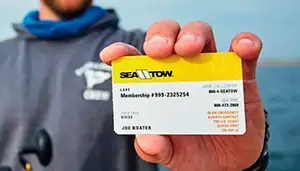
A Back Up Plan – SEA TOW MEMBERSHIP
Always have a backup plan. It’s often said “when the unexpected happens” because no one ever plans on needing help on the water. Having an on-water assistance membership with Sea Tow provides Peace of Mind on the Water™. Use the membership advisor to find the one that fits your boating needs.
Frequently Asked Questions around Boat Safety Equipment
What safety equipment should every boat have?
Every boat should carry properly fitting life jackets for everyone on board, reliable communication such as a VHF radio, visual distress signals, a marine fire extinguisher when required, first aid supplies, an anchor and extra line, and an engine cut-off device when applicable. Boaters traveling offshore or into remote areas should also consider an EPIRB or PLB and a backup communication plan. Always confirm the equipment requirements that apply to your vessel and boating area.
Why is a VHF radio important on a boat?
A VHF radio gives boaters a reliable way to communicate when cell service is weak or unavailable. It can be used to contact nearby vessels, marinas, the Coast Guard, and other responders, making it an important communication tool for routine assistance and urgent situations on the water.
What is the difference between an EPIRB and a PLB?
An EPIRB, or Emergency Position Indicating Radio Beacon, is generally registered to a vessel and designed to transmit a distress alert and location to search-and-rescue services. Some EPIRBs activate automatically when they touch the water. A PLB, or Personal Locator Beacon, is registered to a person, is portable between boats and other activities, and must be manually activated.