
 800-4-SEATOW
 Service Locator


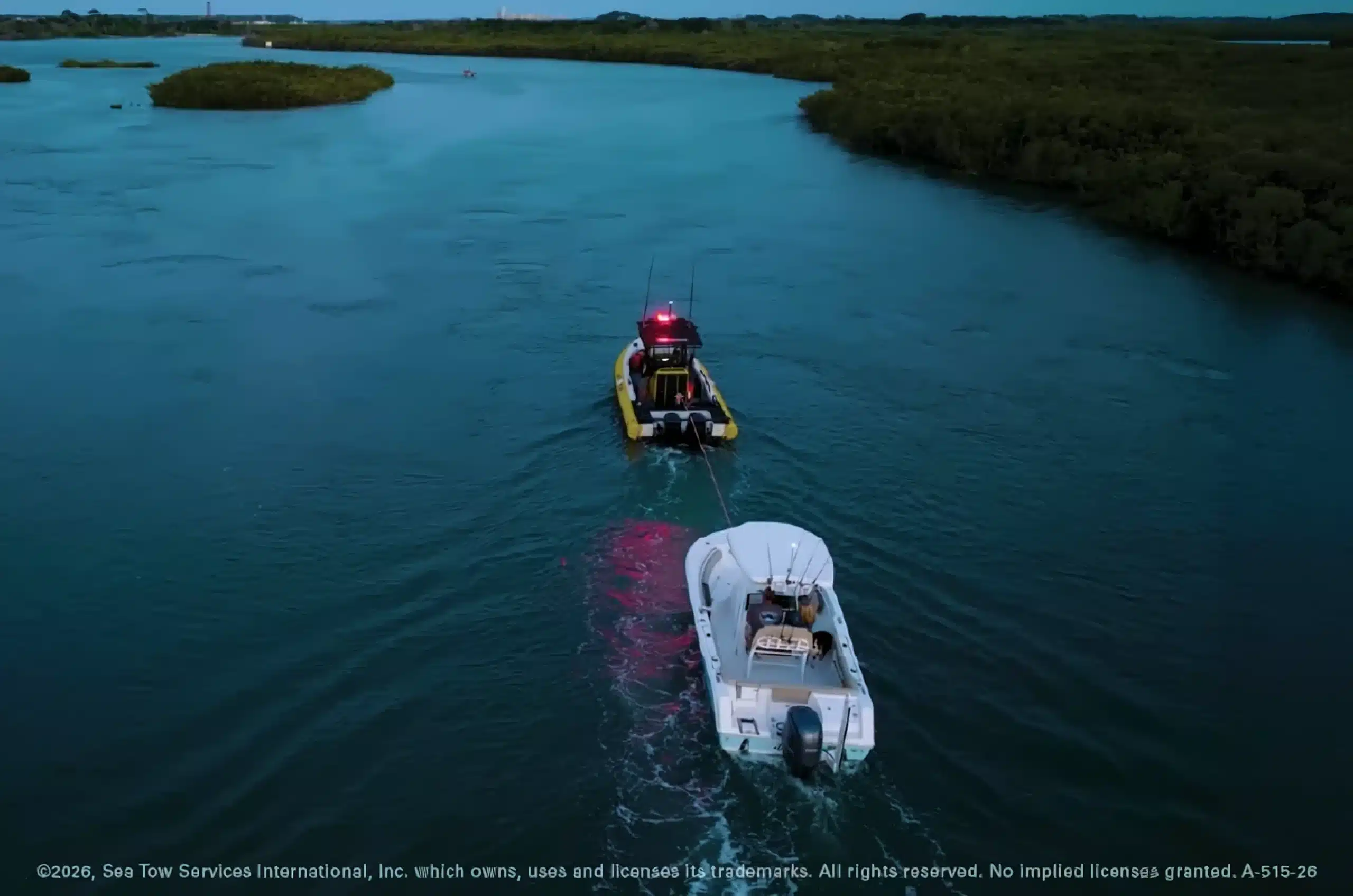
When you’re boating after dark or during periods of reduced visibility, understanding navigation lights is essential for staying safe on the water. The red, green, white, and sometimes yellow lights displayed by other vessels can help you determine the direction they’re traveling, how they’re positioned, and what they may be doing. But knowing what each color means is only part of the picture. This guide explains what boat navigation lights mean, how to recognize common light patterns, and what you need to know to navigate safely.
What Do the Different Boat Navigation Light Colors Mean?
Boat navigation lights use four main colors: red, green, white, and yellow. Each serves a specific purpose, helping other boaters recognize a vessel’s position, direction, or activity.
Red: Port (left) Side
A red navigation light marks the port, or left, side of a boat when facing forward. If you see another boat’s red sidelight, you’re generally looking at its port side.
Green: Starboard (right) Side
A green navigation light marks the starboard, or right, side of a boat when facing forward. If you see another boat’s green sidelight, you’re generally looking at its starboard side.
White: Stern, Masthead, or All-Round Light
White navigation lights serve several purposes depending on their location and configuration:
- Sternlight: Shines toward the rear of the boat.
- Masthead light: Shines forward and to the sides, as required for certain power-driven vessels.
- All-round white light: Visible from every direction and used in specific situations, such as on certain smaller powerboats or boats at anchor.
Yellow: Towing Light
A yellow towing light is used in certain towing operations. It shines toward the rear of the vessel and helps other boaters recognize that a towing operation may be underway.
What Do Different Combinations of Boat Navigation Lights Mean?
When you’re boating at night, the combination of red, green, and white navigation lights you see on another vessel can help you determine its position and which direction it’s facing. Here are some of the most common combinations you’ll see:
- Red and green lights together: You’re likely looking toward the front of the vessel, which may be approaching you.
- Red light only: You’re generally viewing the vessel’s port (left) side.
- Green light only: You’re generally viewing the vessel’s starboard (right) side.
- White sternlight only: You’re likely behind the vessel, looking toward its stern.
- White masthead light with a red or green sidelight: You’re generally viewing a power-driven vessel from an angle or from one side.
Keep in mind that navigation lights don’t tell you everything such as another vessel’s speed, direction of travel, or intentions. Always maintain a proper lookout, assess the surrounding conditions, and follow navigation rules when determining how to safely navigate around other boats.
What Navigation Lights Are Required on a Powerboat?
Powerboats generally display red and green sidelights, a white sternlight, and a white masthead light when operating at night or during periods of reduced visibility. The exact requirements depend on the boat’s size and configuration.
On some smaller powerboats, a single all-round white light can serve as both the masthead and sternlight, along with the required red and green sidelights.
Keep in mind that seeing only a white light doesn’t necessarily mean a boat is anchored. Depending on your viewing angle, you may be seeing the sternlight of a moving vessel or an all-round white light. Always maintain a proper lookout and assess the situation before making navigation decisions.
What Navigation Lights Are Required on a sailboat?
When operating under sail alone, sailboats generally display red and green sidelights and a white sternlight. Depending on the boat’s size, these lights may be combined into a single lantern near the top of the mast.
When a sailboat uses its engine, even if the sails are raised, it’s considered a power-driven vessel and must display the appropriate powerboat navigation lights.
Some sailboats may also display two all-round lights near the top of the mast, with red above green, in addition to their sidelights and sternlight. This optional configuration helps other boaters recognize a vessel operating under sail.
What Navigation Lights Are Required When Anchored?
When your boat is anchored at night or during periods of reduced visibility, you generally need to display an all-round white anchor light that can be seen from every direction. The exact requirements depend on your boat’s size and where you’re anchored.
Make sure your anchor light is positioned where it won’t be blocked by canvas, antennas, or other equipment. Remember that being anchored is different from being tied to a dock, and the lighting requirements may vary depending on the situation.
Navigation Lights for Towing, Fishing, and Other Vessels
Some vessels display additional navigation lights to indicate what they’re doing or whether their ability to maneuver is limited. You may encounter these light combinations around commercial fishing boats, towing operations, dredging equipment, and other working vessels.
Unlike the standard red, green, and white lights found on most recreational boats, these vessels may display additional lights arranged vertically or in specific combinations. These patterns help other boaters recognize activities such as:
- Towing: A vessel towing another boat or object may display additional lights to indicate the operation.
- Fishing: Certain fishing vessels display special lights when actively engaged in fishing operations.
- Restricted maneuverability: Vessels performing work that limits their ability to change course may display additional lights.
- Not under command: A vessel unable to maneuver may display a special light configuration.
If you encounter an unfamiliar combination of navigation lights, reduce speed, maintain a safe distance, and avoid making assumptions about the vessel’s ability to maneuver.
When Are boat Navigation Lights Required?
Boat navigation lights are required from sunset to sunrise and during periods of restricted visibility, such as fog or heavy rain. Even during daylight hours, navigation lights must be displayed when visibility is limited.
Turn on your navigation lights before conditions make it difficult for other boaters to see you, and check that all required lights are working and clearly visible. Make sure they’re not blocked by equipment, canvas, or other obstructions.
Avoid using decorative or other lights that could be mistaken for navigation lights or make them harder for other boaters to see.
Can Decorative Boat Lights Interfere With Navigation Lights?
Decorative lighting can make your boat more visible, but it can also make it harder for other boaters to recognize your navigation lights. Underwater lights, LED strips, light bars, and bright cockpit or spreader lights may obscure required navigation lights or create confusion about your boat’s position and direction.
Always choose marine navigation lights approved for your vessel and install them according to the manufacturer’s instructions. Remember that matching the color of a navigation light isn’t enough. Its brightness, viewing angle, and placement are just as important.
Boat Navigation Light Inspection Checklist
Before heading out on the water, especially if you’ll be boating after dark, take a few minutes to make sure your navigation lights are working properly.
- Test all navigation lights. Turn on each required light and check that it’s working. Don’t rely solely on the indicator at the helm.
- Check light placement. Confirm that the red light is on the port (left) side and the green light is on the starboard (right) side.
- Inspect lenses. Make sure they’re clean, clear, and free of cracks, fading, or other damage that could affect visibility.
- Look for obstructions. Check that canvas, equipment, antennas, and other objects aren’t blocking the lights.
- Inspect electrical connections. Look for corrosion, loose wiring, or damaged connectors that could cause lights to flicker or fail.
- Check the anchor light. Make sure it’s working and visible from every direction, as required for your vessel.
- Carry appropriate replacements. Keep spare bulbs or approved replacement components on board when applicable.
- Minimize glare. Adjust interior screens and deck lighting so they don’t interfere with your night vision or make navigation lights harder to see.
Include navigation lights in your regular boat maintenance routine, and check them before every trip when you may need them. A light that works intermittently could indicate a corroded connection or another electrical issue that needs attention.
What to Do if a Boat Navigation Light Stops Working
If a navigation light stops working while you’re on the water, take steps to stay safe and avoid creating confusion for other boaters.
- Slow down and stay alert. Reduce your speed, maintain a careful lookout, and move away from busy boating areas when it’s safe to do so.
- Check for simple problems. If conditions allow, check the switch, circuit breaker, fuse, or bulb for an obvious issue. Avoid attempting electrical repairs while underway or in unsafe conditions.
- Avoid misleading lighting. Don’t substitute a flashlight or other light that could be mistaken for a different navigation signal.
- Return to a safe location. If you can’t restore the required lights, head to a safe location for repairs as soon as conditions permit. Request assistance if you’re unable to navigate safely.
Navigation lights are essential for helping other boaters recognize your position and direction. If a light fails, prioritize safety and avoid continuing your trip without the required lighting.
Tips for Safe Boating at Night
Safe boating after dark requires more than working navigation lights. Before heading out, review your route, check the weather, identify potential hazards, and make sure you have enough fuel and reliable communication equipment. Once underway, reduce unnecessary screen glare, maintain a proper lookout, and allow extra time and distance to react to other vessels and obstacles.
For more tips on preparing for nighttime trips, check out Sea Tow’s guide to boating after dark. And if an electrical or navigation problem prevents you from continuing safely, contact Sea Tow for available on-water assistance.
Frequently Asked Questions
What do red and green navigation lights mean on a boat?
Red navigation lights mark a boat’s port (left) side, while green lights mark the starboard (right) side. If you see both red and green sidelights, you’re generally looking toward the front of the vessel. Seeing only one usually means you’re viewing that side of the boat.
What does a white navigation light on a boat mean?
A white light can serve several purposes depending on its location and the other lights displayed. It may be a sternlight, masthead light, all-round light, or anchor light. Seeing a white light alone doesn’t necessarily mean a boat is anchored.
Do boat navigation lights need to be on during the day in the fog?
Yes. Navigation lights are required during periods of restricted visibility, including fog and heavy rain, even during daylight hours. Boaters must also be aware of safe speed, lookout, and sound signals.
Can I replace my boat’s navigation light bulbs with led’s?
Only if the replacement is approved for use with your navigation light fixture and meets the applicable requirements. Not all LED bulbs are compatible with older fixtures, and using the wrong replacement could affect the light’s color, brightness, or visibility.
What should I do if I can’t identify another boat’s navigation lights?
Reduce your speed as needed, maintain a safe distance, and keep a careful lookout. Don’t assume another vessel’s direction or activity based on a single light. If you’re unsure what you’re seeing, use extra caution.

Sea Tow Team
Sea Tow has been the premier leader in on-water boating assistance since 1983. We want to share news, press, tips and all things boating.
Updated on: - Created on: