
 800-4-SEATOW
 Service Locator


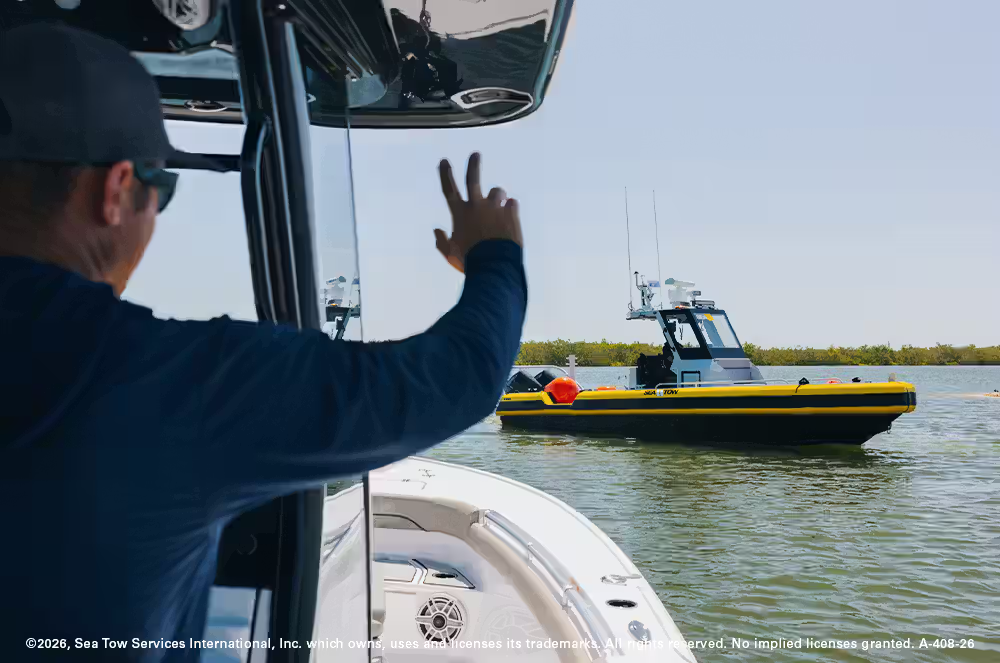
If your boat won’t start while out on the water, do not keep trying to crank the engine. The constant crank can quickly drain your battery and eliminate the chance to restart even if the issue is minor.
Your first priority is safety. Ensure your passengers are all safe and wearing life jackets. Then, assess your surroundings, including wind, current, and nearby hazards. Determine whether you are drifting toward shallow water, traffic, or structures. If conditions allow, deploy your anchor to stabilize your position. Staying in control of your situation is more important than troubleshooting right away.
Common Reasons a Boat Won’t Start on the Water
There are several reasons why an engine will not to start while out on the water, ranging from simple battery or electrical problems to fuel delivery issues or other mechanical concerns. Understanding these common causes can help you quickly identify the problem and determine the appropriate next steps to get the engine running again.
Battery Issues
A weak or dead battery is one of the most frequent causes. Corrosion or loose connections can also prevent proper power delivery.
Fuel Problems
Running out of fuel, contaminated fuel, or a clogged fuel filter can prevent the engine from starting.
emergency cut-off switch (ECOS)
If the ECOS switch is not properly engaged, the engine will not start.
Electrical or Ignition Failure
Faulty wiring, blown fuses, or ignition issues can prevent startup.
Starter Motor Problems
If you hear clicking but no cranking, the starter may be failing.
Quick Checks You Can Safely Perform
If conditions are stable, you can perform a few simple checks:
- Confirm the emergency cut-off switch is properly attached
- Check battery terminals for tight connections
- Verify fuel level and that the fuel line is properly connected
- Inspect visible fuses or breakers
Avoid opening engine components or attempting complex repairs while on the water.
What Not to Do
- Do not repeatedly crank the engine
- Do not ignore drift or changing conditions
- Do not attempt mechanical repairs offshore
When This Becomes a Towing Situation
If your engine will not start and you cannot safely control your boat, this is no longer a troubleshooting issue. It becomes more critical when:
- You are drifting toward hazards
- Weather conditions are worsening
- You are in a busy channel or navigation route
- You cannot maintain safe positioning
How Sea Tow Helps When Your Boat Won’t Start
When your boat will not start, Sea Tow provides professional on-water assistance designed to get you and your passengers back safely. Professional captains will:
- Assess your situation
- Attempt to troubleshoot the issue first
- Provide towing to a marina or repair facility
Frequently Asked Questions
Why won’t my boat start on the water?
Common causes include battery failure, fuel issues, kill switch problems, or electrical faults.
Should I keep trying to start my engine?
No. Repeated attempts can drain your battery and worsen the situation.
Can Sea Tow help if my boat won’t start?
Yes. Sea Tow provides towing and on-water assistance when your boat engine will not start.
What should I do first if my engine won’t start?
Focus on safety: assess your surroundings, stabilize your position, and ensure everyone on board is wearing life jackets.
Final Thoughts
A boat that won’t start on the water can escalate quickly, especially if conditions are changing. Focus on safety, limit troubleshooting to simple checks, and recognize when it’s time to call for professional help. Knowing when to stop trying and start protecting your situation is part of responsible boating.

Sea Tow Team
Sea Tow has been the premier leader in on-water boating assistance since 1983. We want to share news, press, tips and all things boating.
Updated on: - Created on: