
 800-4-SEATOW
 Service Locator


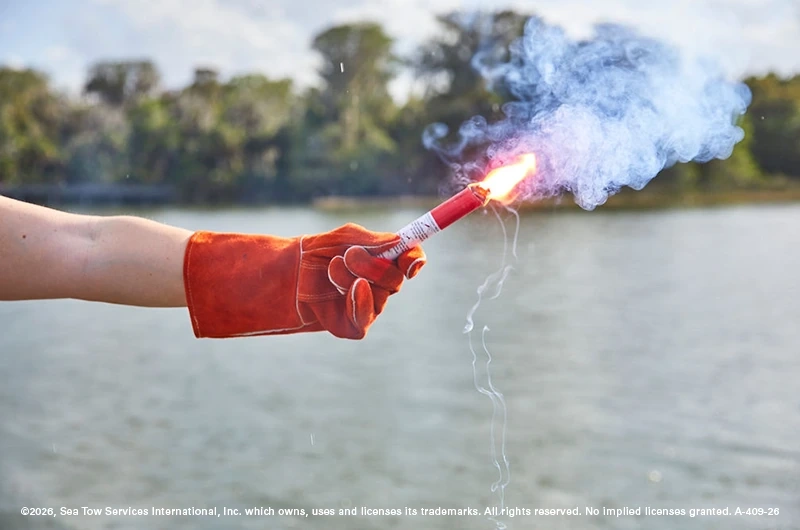
Boaters use visual distress signals to alert nearby vessels and rescuers when they need assistance and to help those nearby locate the vessel or people in the water. Depending on the situation, boaters may use signals designed for daytime, nighttime, or both.
A distress signal should only be used when help is needed. Be sure to have approved equipment on board that matches the waters and operating times for the trip, keep it accessible, and make sure passengers understand where it is stored and how to use it.
Federal and state visual distress signal requirements vary by vessel, waterway, operating time, and exceptions. Always confirm the current requirements before you depart.
When Are Visual Distress Signals Required?
Federal requirements apply to many vessels operating on the Great Lakes, high seas, territorial seas, and certain connecting waters. Requirements and exceptions can vary based on the vessel type, size, and operation. Different state requirements may also apply in addition to federal rules.
Because requirements and approved equipment can change, boaters should check current Coast Guard guidance and the laws that apply to the waters where they plan to operate. A vessel safety check can also help ensure the required safety equipment is on board, in good condition, and ready to use.
Daytime vs. Nighttime Distress Signals
A daytime signal must be visible against daylight and the surrounding horizon, just as a nighttime signal must be visible after dark. Carrying only a daylight flag does not satisfy a nighttime need, and a light intended for night may be difficult to see in bright sun.
Boaters who run at all hours need equipment that covers both conditions. Some pyrotechnic devices may be approved for daytime use, nighttime use, or both. Certain approved electronic distress lights can meet nighttime requirements when carried with an approved daytime distress signal. Boaters should check each device’s approval and its intended use to make sure they have the appropriate combination of signals on board.
Pyrotechnic Marine Flares
Pyrotechnic signals create a bright flame, smoke, and/or aerial display. Their visibility and urgency make them useful, but they contain energetic materials, have expiration dates, and require careful storage and handling.
Handheld Red Flares
A handheld red flare produces a bright red light and is generally used at night. Hold it downwind and over the gunwale so hot residue and smoke move away from the boat, people, fuel, and rigging.
Aerial Flares and Meteor Signals
Aerial devices launch a bright signal above the horizon and can be visible over a larger area. They must be aimed and fired according to the instructions, away from people, sails, structures, aircraft, and flammable materials.
Orange Smoke Signals
Orange smoke is a daytime signal that can help aircraft and nearby vessels identify position and wind direction. Keep in mind, smoke is not a substitute for a nighttime signal.
Never fire a flare for practice unless the location, device, and local authorities permit. A false distress signal can trigger an emergency response, create fire, and risk injury.
Electronic Visual Distress Signal Devices
An approved electronic visual distress signal device can provide a repeating nighttime light without flame, hot slag, or a pyrotechnic expiration date. The device must be approved for the intended regulatory use; an ordinary flashlight, strobe, or phone light is not an equivalent signal.
Electronic devices still require maintenance. Inspect the housing, switch, lens, battery compartment, and approval label. Carry fresh batteries or keep the rechargeable unit maintained according to the manufacturer’s instructions.
Orange Distress Flags
An approved orange distress flag is a daytime signal with a recognized black symbol on an orange background. It can be displayed from a mast, boathook, paddle, or any elevated point where it will be seen.
A flag is reusable and does not burn, but its visibility depends on daylight, wind, height, and line of sight. Combine it with radio communication, sound signals, mirrors, lights, or other available methods.
Signal Mirrors, Flashlights and Improvised Signals
A signal mirror can direct sunlight toward an aircraft or vessel. A flashlight can attract attention at night and may be used to signal in a pattern. Bright clothing, waving arms, and reflective materials can improve visibility.
These tools are useful additions but may not satisfy carriage requirements. Required visual distress signals must be approved and in serviceable condition.
EPIRBs, PLBs, and rescue Beacons
Emergency rescue beacons are electronic locating devices, not visual distress signals. An EPIRB or PLB can transmit an alert and location through a search-and-rescue system when properly registered and activated. These devices complement flares, flags, and lights. A beacon helps start and direct a response, while a visual signal helps rescuers confirm the final location.
How to Choose a Signal for the Situation
- Use a VHF radio or another means of communication first when possible.
- Activate a registered emergency beacon when the situation meets its intended emergency use.
- Use an aerial signal when potential rescuers are distant and the area is clear for safe firing.
- Use a handheld flare, smoke signal, flag, mirror, or electronic light when a vessel or aircraft is close enough to see it.
- Reserve limited pyrotechnic signals for the best chance of being observed.
- Continue displaying reusable electronic lights or flags as conditions allow.
- Do not wait until batteries are depleted, darkness arrives, or the vessel is sinking to organize the equipment. Keep the distress kit where it can be reached immediately.
How to Store Visual Distress Signals
- Keep the equipment dry, accessible, and protected from impact.
- Store pyrotechnics in the original packaging or a suitable labeled container.
- Do not store flares near fuel, batteries, ignition sources, or extreme heat.
- Check electronic device batteries and test functions as directed.
- Make sure passengers know the storage location and how to use them.
When to Use a Distress Signal
Use distress signals only when the vessel or people need help, and the situation may threaten life or safety. Examples include sinking, fire, capsize, person overboard, serious injury, loss of control near hazards, or being disabled in deteriorating conditions.
Contact the Coast Guard or local authorities when in grave or imminent danger.
Common Distress Signal Mistakes
- Keeping the signals buried beneath gear
- Carrying expired pyrotechnics
- Assuming any flashing light satisfies law requirements
- Not replacing depleted or corroded batteries
- Firing every flare before rescuers are within viewing range
- Holding a flare where hot material can fall into the boat
- Failing to show passengers how to access the equipment
- Depending on visual signals without a VHF radio or registered emergency beacon
Frequently Asked Questions
What is the difference between a flare and an electronic flare?
A pyrotechnic flare produces flame, light, smoke, or an aerial signal for a limited time. An approved electronic device produces a repeating light and can be reused when its batteries and condition are maintained.
Can an orange flag be used at night?
No. The orange distress flag is a daytime signal. Boaters underway after dark need an approved nighttime signal.
Do expired flares still work?
An expired flare may or may not function reliably and generally does not count as part of the current required pyrotechnic set. It may be carried as a backup only when stored safely and allowed by local guidance.
Is a phone flashlight a visual distress signal?
A phone light may help attract attention, but it is not an approved visual distress signal and should not replace required equipment.
Should I use flares for a routine tow request?
Normally, no. Use a phone, VHF radio, or the Sea Tow app for a non-emergency assistance request. Flares communicate distress and should be reserved for emergency situations.
Choose Signals That Match the Situation
A complete distress signaling plan uses communication, location, and visual confirmation. Carry approved day and night devices for the route, maintain batteries and pyrotechnics, and keep everything accessible.
Choose the signal most likely to be seen, use it safely, and contact emergency authorities first when people or the vessel are in immediate danger.

Sea Tow Team
Sea Tow has been the premier leader in on-water boating assistance since 1983. We want to share news, press, tips and all things boating.
Updated on: - Created on: