
 800-4-SEATOW
 Service Locator


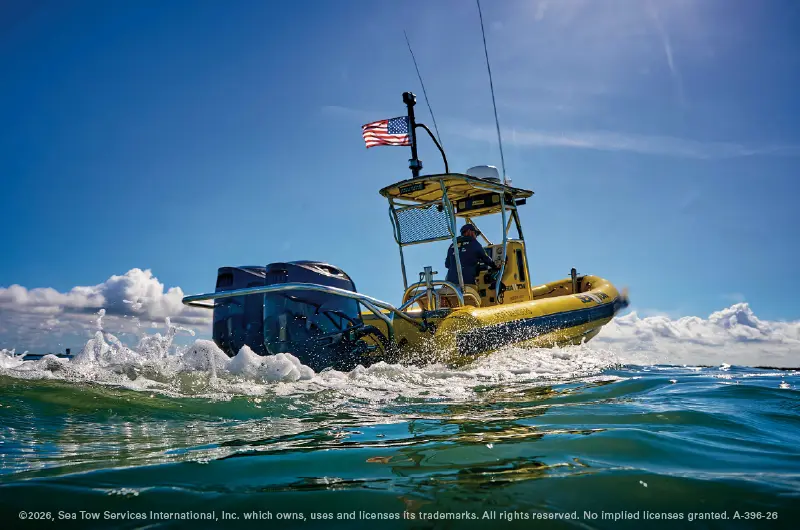
A boat engine works by converting fuel into controlled combustion that turns a driveshaft or propeller, pushing the vessel through the water. While that basic principle sounds similar to a car engine, marine engines are built differently to handle water exposure, corrosion, cooling systems, and constant load.
Understanding how your engine operates helps you recognize early warning signs before a minor issue becomes a breakdown.
The Basic Combustion Process
At its core, a marine engine operates on the same four-stroke principle used in most gas-powered engines:
- Intake – Air and fuel enter the cylinder
- Compression – The mixture is compressed
- Power – A spark ignites the mixture, creating force
- Exhaust – Burned gases exit the engine
This controlled explosion spins the crankshaft, which ultimately turns the propeller.
Unlike cars, boat engines operate under sustained load because they are constantly pushing against water resistance. As a result, marine engines often work harder for longer periods, especially during offshore runs and cruising. This makes durability and proper maintenance critical for reliable performance.
How Outboard Engines Work
Outboard motors are self-contained units mounted on the transom. They combine the engine, gearbox, and propeller in one compact system that is positioned outside the hull.
Inside the main engine section, the powerhead, fuel and air combust to generate power. That power is transferred through the motor and spins the propeller, which pushes the water backward and moves the boat forward.
This process works in several steps:
- Combustion in the powerhead: Fuel and air ignite inside the engine cylinders, creating power
- Crankshaft rotation: The pistons move downward, turning the crankshaft
- Driveshaft transfer: The crankshaft spins a vertical driveshaft that carries power to the lower unit
- Lower unit gears: Gears in the lower unit transfer that power to the propeller
- Propeller thrust: The propeller pushes water backwards, moving the boat forward
Because the entire unit sits outside the hull, outboards are easier to service and replace than many inboard systems. A deeper breakdown of the mechanics can be found in how an outboard motor works, especially if you’re troubleshooting issues.
How Inboard Engines Work
Inboard engines are mounted inside the hull, connect to driveshafts that exit through the bottom of the boat, and spin propellers beneath the hull. Unlike outboards, which transfer power vertically, inboard engines transfer power horizontally.
Inboard Engine Characteristics:
- Mounted Inside the Hull: The engine sits inside the boat rather than on the transom
- Driveshaft Power Transfer: Power moves through a shaft that exits through the bottom of the boat
- High Torque: Inboards provide strong, steady power under heavy load
These engines are common in larger vessels and offshore boats because they provide durability and torque under sustained load. Unlike outboards, inboard engines require ventilation before starting due to the enclosed compartments.
How Marine Engine Cooling Systems Work
One of the biggest differences between car engines and boat engines is how they are cooled.
Most marine engines use water drawn from the surrounding environment to regulate temperature. This raw water cooling system makes engines efficient but also exposes them to corrosion, debris, and blockages.
Why Boat Engines Typically Overheat?
- Clogged water intake
- Damaged impeller
- Low coolant
- Blocked exhaust system
When cooling systems fail, overheating happens quickly. Knowing what to do when a boat engine overheats can prevent permanent damage.
Why Boat Engines Fail on the Water
Even well-maintained engines can fail. Common causes include:
- Cooling system blockages
- Fuel contamination
- Electrical issues
- Corrosion
- Impeller failure
- Low oil levels
- Weak or dead battery
- Lack of maintenance
- Overheating
Routine checks and consistent maintenance dramatically reduce risk. Following practical boat maintenance tips will help prevent many on-water breakdowns.
Why Marine Engines Break Down Offshore
Offshore operation increases strain due to:
- Sustained RPM
- Rough sea conditions
- Longer distances from port
- Saltwater exposure
When propulsion is lost offshore, the situation shifts quickly from mechanical inconvenience to a safety concern.
How Maintenance Extends Engine Life
Routine boat engine maintenance helps prevent breakdowns, extends the life of your engine(s), and keeps all the essential systems running efficiently. Proper winterization, spring commissioning, oil changes, cooling system inspections, and battery care all contribute to longevity. Knowing when and how to winterize a boat reduces startup issues and internal corrosion that often appear months later, just as spring commissioning prepares your boat for the season ahead.
When Understanding the Engine Isn’t Enough
Knowing how a boat engine works helps you make better decisions on the water. But mechanical knowledge does not replace professional support when conditions deteriorate. If your engine fails, seeking assistance early reduces risk to both passengers and vessel.
Many boaters prepare ahead of time by investing in a Sea Tow membership. Having a backup plan for the unexpected on the water will make you a more confident boater.
Frequently Asked Questions
Do boat engines work the same as car engines?
They use similar combustion principles, but marine engines are built for water cooling, corrosion resistance, and sustained loads.
Why do boat engines overheat more easily?
Marine engines rely on water intake systems that can clog or fail, especially in debris-filled or shallow environments.
What is the difference between inboard and outboard engines?
Outboards are mounted externally and are self-contained. Inboards are installed inside the hull and transfer power through a driveshaft.
Does Sea Tow assist with engine failure?
Yes. Sea Tow provides 24/7 on-water assistance and boat towing services when mechanical failure leaves you stuck on the water.

Sea Tow Team
Sea Tow has been the premier leader in on-water boating assistance since 1983. We want to share news, press, tips and all things boating.
Updated on: - Created on: