
 800-4-SEATOW
 Service Locator


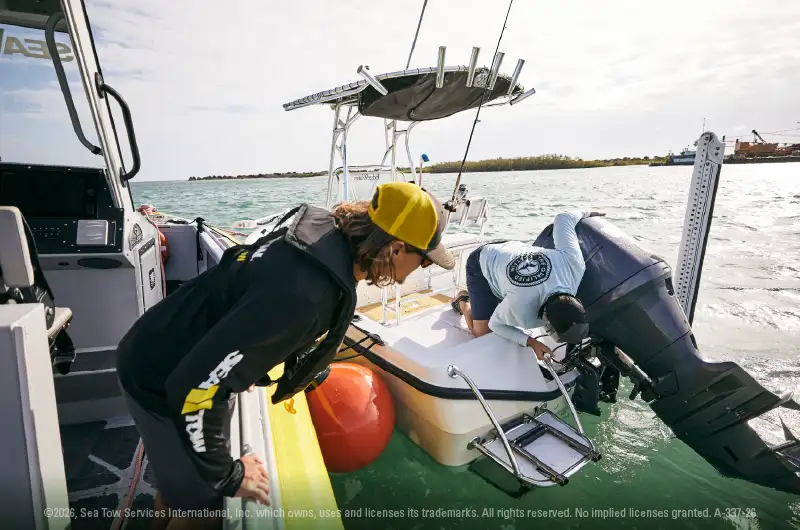
If you discover water in your boat engine oil, shut the engine off immediately and do not restart it. Running an engine with contaminated oil can cause serious damage within minutes.
Milky or cloudy oil is not something to monitor and deal with later. It’s a sign that water has mixed with your lubrication system, and that can quickly destroy internal components. Your first priority should be safety. Assess your surroundings, check your drift, and determine how you will safely return to port.
How to Tell If There Is Water in Your Boat Engine Oil
The most common indicator of water intrusion is oil that looks milky, creamy, or light brown on the dipstick. Normal engine oil should appear amber or dark brown. If it looks cloudy, water contamination is likely.
Other warning signs include:
- Rising oil level without adding oil
- White smoke from the exhaust
- Overheating alarms
- Rough engine performance
- Knocking or unusual engine noise
If your engine overheated before you noticed the oil change, review what to do when a boat engine overheats. Overheating is one of the most common precursors to gasket failure and water intrusion.
What Causes Water in Boat Engine Oil?
Water can enter your engine oil in several ways. Some of the most common, include:
Blown Head Gasket
A failed head gasket can allow coolant or raw water to mix internally with oil.
Cracked Engine Block
Severe overheating or freezing temperatures can crack the block and allow water intrusion.
Exhaust Manifold or Riser Failure
Saltwater corrosion can compromise exhaust components over time.
Flooding or Submersion
If your boat has taken on water from heavy seas, a failed bilge system, or after running aground, contamination may follow. Impact damage can create secondary mechanical issues that appear later.
Should You Run the Engine If Water Is in the Oil?
NO – running the engine, even briefly, can:
- Destroy bearings
- Damage pistons
- Cause complete engine seizure
- Multiply repair costs significantly
Oil protects internal components, and once water mixes in, that protection is compromised.
What to Do Right Away
If you confirm or strongly suspect water in the oil:
- Shut the engine down immediately
- Do not attempt to restart the engine
- Assess your position and nearby hazards
- Deploy anchor if depth and conditions allow
- Ensure everyone on board is wearing a properly fitted life jacket
- Monitor weather and current
If your boat cannot operate safely under its own power, this becomes a towing situation rather than a troubleshooting scenario.
Sea Tow® provides 24/7 nationwide boat towing and on-water assistance services to help when the unexpected happens. Check that your membership is active so you don’t get stuck with out-of-pocket expenses.
When Water in Engine Oil Becomes an Emergency
This situation can escalate quickly if:
- You are offshore
- Weather is changing
- You are drifting toward shoals, rocks, or traffic
- The engine has already stalled
- You smell burning oil
Without it clean oil, engine damage accelerates rapidly. If safe navigation is no longer possible, contacting a professional boat towing service is the smartest option. Attempting to “limp back” to port with contaminated oil often turns a repairable issue into a fullblown engine replacement.
Can You Fix Water in Engine Oil While You’re “on the Water?”
In almost all cases, no. Repair typically requires:
- Draining and flushing the oil system
- Pressure testing components
- Replacing gaskets or manifolds
- Inspecting internal damage
These repairs are done dockside or at a service facility. Trying to solve the problem while drifting increases both mechanical and personal safety risk.
How Sea Tow Helps When Engine Failure Occurs
When engine failure prevents safe operation, Sea Tow provides professional on-water assistance to get you and your passengers back home safely. Instead of risking further engine damage, professional Captains can:
- Stabilize your vessel
- Provide towing to a marina or repair facility
- Help prevent additional mechanical loss
Understanding potential boat towing costs before it’s needed can help prevent unpleasant surprises. Instead of worrying about the cost of a tow, your Sea Tow membership has it covered. You can also review current Sea Tow membership options to understand all the benefits you receive. Preparation is always less stressful than reacting in the moment.
Frequently Asked Questions
What does milky oil mean in a boat engine?
Milky oil usually indicates water contamination inside the engine. This often results from gasket failure, cracks, or flooding and requires immediate attention.
Can water in engine oil ruin my boat engine?
Yes. Even brief operation with contaminated oil can severely damage internal components and lead to total engine failure.
Is it safe to run a boat with water in the oil?
No. The engine should be shut down immediately to prevent further damage.
Can Sea Tow tow my boat if my engine is damaged?
Yes. Sea Tow provides professional boat towing and on-water assistance when engines cannot safely operate due to mechanical failure.
How do I request a tow from Sea Tow if my engine fails?
If you need on-water assistance, you can reach Sea Tow on VHF Channel 16, by phone at 800-4-SEATOW, or through the Sea Tow app.
Final Thoughts
Finding water in your boat engine oil is serious, but acting quickly can protect further damange and your safety. Shut the engine down, assess your surroundings, and make a clear decision about your next step. Knowing when to stop troubleshooting and call for professional assistance is part of responsible boating.

Sea Tow Team
Sea Tow has been the premier leader in on-water boating assistance since 1983. We want to share news, press, tips and all things boating.
Updated on: - Created on: