
 800-4-SEATOW
 Service Locator


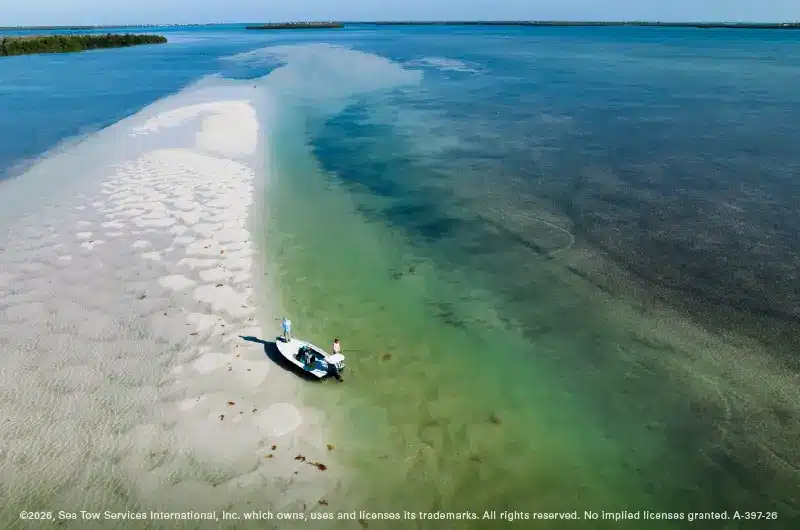
If your boat breaks down far from home, make sure everyone on board is safe, identify your exact location, and call an on-water assistance provider if you can’t get it running. Being away from familiar waters can make a breakdown more stressful, but staying calm and following the right steps can help prevent the situation from getting worse, which is why having a clear plan for the unexpected matters.
Make Sure Everyone On board Is Safe
Before troubleshooting or calling for help, make sure passengers are safe and the vessel is not drifting into danger. Everyone should be wearing a properly fitted life jacket. Even if conditions appear calm, a disabled boat can drift unexpectedly, and weather or vessel traffic can change quickly.
Next, assess your surroundings. Look for:
- Shallow water
- Rocks or shoals
- Strong current
- Heavy boat traffic
- Bridges or inlets
- Docks or moored boats
- Worsening weather
- Signs of water entering the boat
If it is safe and practical, drop anchor to reduce drift. If visibility is poor or it is getting dark, turn on navigation lights so other boaters can see you. It’s a stressful situation, but safety always comes first before repairs.
Identify Your Exact Location
When your boat breaks down far from home, knowing your location is one of the most important details you can provide. In familiar waters, you may be able to describe your location by memory, somewhere different can be much harder.
Gather as much information as possible. Do so by using:
- GPS coordinates from your chartplotter, phone, or marine app
- Nearby channel markers or buoys
- The name of the lake, bay, inlet, river, or waterway
- Nearby marinas, bridges, ramps, or landmarks
- Approximate distance from shore
- Water depth if available
- Direction of drift if the boat is moving
If cell service is weak, use a VHF radio. The more accurately you can explain where you are, the easier it is for help to find you.
Bonus tip: Automatic GPS sharing in the Sea Tow app provides your location with a direct connection to the local Sea Tow, allowing members and non-members to request assistance faster and more accurately.
Determine the issue You Have
Once you confirm everyone is safe and your location is clear, try to understand what may have caused the breakdown. You do not need to diagnose the boat like a mechanic, but identifying the general issue can help determine the right type of assistance.
Common boat breakdown issues include:
- Dead battery
- Engine overheating
- Out of fuel
- Fuel system problems
- Electrical failure
- Steering problems
- Propeller damage
- Line or debris tangled around the prop
- Running aground
- Mechanical failure
- Water intrusion
Some problems may be resolved by troubleshooting and some with on-water services such as a jump start or fuel delivery. Other situations may require a tow to a marina or repair facility. More serious incidents, such as sinking, hard grounding, severe hull damage, or environmental hazards, may require salvage and recovery support.
If you are unsure whether the boat is safe to operate, do not force it. Continuing to run the engine or navigate with damaged steering, overheating, or water intrusion can make the problem worse.
Call an On-Water Assistance provider
If your boat cannot safely return under its own power, call an on-water assistance provider that can get you back to your marina, dock, boat ramp, or repair facility. Depending on the issue, assistance may include towing, fuel delivery, a jump start, or other on-water support.
When calling for help, be ready to provide:
- Your exact location or GPS coordinates
- Your name and phone number
- Boat make, model, length, and color
- Vessel name or registration number
- Number of people on board
- Description of the problem
- Whether the boat is anchored, drifting, grounded, or taking on water
- Weather and water conditions
- Any nearby hazards
If you are a Sea Tow member, contact Sea Tow through the app, by phone, or by VHF channel 16. Stay near your phone or radio after calling so the responding captain can reach you if more details are needed.
What If You’re Outside where you typically boat?
Breaking down outside your normal boating area can make the situation more confusing. You may not know who is available to provide assistance, which marina can accept your boat, or where the closest repair facility is located. Local knowledge matters on the water, especially when you are dealing with unfamiliar channels, tides, ramps, bridges, marinas, or hazards.
Sea Tow is standing by 24/7 ready to assist nationwide. You local Captains’ on-water knowledge will help you troubleshoot an issue, nagivate the waters, or provide assistance to get you back to the dock. As a member, you receive a full-suite of on-water services. Learn about membership options and choose what best aligns with the way you use your boat.
For boaters who travel, trailer, rent, or split time between multiple waterways, this added support can provide peace of mind before something goes wrong.
Stay Visible and Conserve Power While You Wait
After calling for assistance, focus on staying safe, visible, and reachable.
Keep life jackets on and have passengers remain seated. Monitor the boat’s position and watch for drift, nearby traffic, or changing weather. If you are anchored, check that the anchor is holding and that the vessel is not swinging toward a hazard.
Conserve battery power whenever possible. You may need your phone, VHF radio, GPS, navigation lights, or bilge pump while waiting for assistance. Avoid using unnecessary electronics that could drain the battery.
Use visual and sound signals when appropriate. This may include navigation lights, a horn, whistle, flag, flashlight, or emergency signaling equipment depending on the situation.
Unless instructed otherwise, stay with the boat.
When Should You Call the Coast Guard Instead?
A boat breakdown is not an emergency, but some situations require immediate emergency response. Immeidately call the Coast Guard or local authorities first if:
- Someone is injured
- Someone has fallen overboard
- The boat is sinking or taking on water
- There is fire, smoke, or risk of explosion
- There is a fuel spill or strong fuel odor
- The boat is in a dangerous channel or high-traffic area
- Weather is rapidly worsening
- The vessel may capsize
- You cannot safely remain onboard
- You cannot communicate your location
- The situation creates immediate danger to people or other vessels
On-water assistance providers, like Sea Tow, are non-emergency response for vessel assistance. If there is immediate threat to life or safety, treat the situation as an emergency first.
Prepare Before Boating Away From Home
The best time to plan for a breakdown is before you leave the dock. A few simple steps can make a major difference if something happens away from home. Before your next trip, check:
- Fuel levels and planned fuel stops
- Battery condition
- Engine oil and coolant
- Belts, hoses, and basic engine components
- VHF radio function
- Phone battery and backup charger
- Navigation lights
- Bilge pump
- Life jackets
- Safety equipment
- Anchor and dock lines
- Basic tools and spare parts
- Weather, tides, and local hazards
- Nearby marinas, ramps, and fuel docks
You should also save important contact information before leaving. This includes contact for your local Sea Tow Captain, marina details, lodging address, emergency contacts, and any relevant membership or insurance information.
Filing a float plan is also an important step. Let someone know where you are going, who is on board, when you expect to return, and what to do if they do not hear from you by a certain time.
Don’t Wait Until You Are Stranded to Think About Towing Coverage
Many boaters only think about towing coverage after something goes wrong. But when your boat unexpectedly breaks down, that is exactly why you want a plan already in place.
Without an on-water assistance membership, the average cost of a tow is $950 – $1000. Boaters who plan ahead will find the best membership option that best aligns with the way they use their boat before the boating season begins. Membership helps reduce uncertainty by giving boaters access to professional Captains, priority service, and nationwide coverage.
Frequently Asked Questions
Who should I call if my boat breaks down far from home?
If you cannot operate your boat safely, call a boat towing and on-water assistance provider. Sea Tow members receive 24/7 priority service including towing, jump starts, fuel delivery, and more.
What should I do first when my boat breaks down?
First, make sure everyone on board is safe. Have passengers put on life jackets, assess whether the boat is drifting toward danger, identify your exact location, and contact help if the vessel cannot safely return under its own power.
Can Sea Tow help if I am boating outside my home area?
Yes. Sea Tow Captains respond from 500+ ports nationwide. If you are a Sea Tow member boating outside of your home area, understand the “out-of’area” coverage you receive by reviewing the Sea Tow Membership Agreement. If you are not a member and need service, you will pay out-of-pocket rates.
What information should I give a boat towing service?
Provide your GPS coordinates, number of passengers on board, nearby landmarks or markers, boat description, nature of the problem, and whether the boat is anchored, drifting, grounded, or taking on water.
Should I call the Coast Guard or a towing service?
Call the Coast Guard or local authorities if there is immediate danger, injury, fire, sinking, severe weather, or risk to life. For non-emergency breakdowns where the vessel needs assistance or towing, contact a marine towing provider such as Sea Tow.
Does boat insurance cover towing away from home?
Some boat insurance policies may include towing coverage or reimbursement, but coverage varies. Sea Tow membership is not insurance and provides boat towing and on-water assistance services that are coverd by one annual rate with no out-of-pocket expenses.
How can I prevent a breakdown while boating away from home?
Inspect your boat before the trip, check fuel and battery levels, carry safety gear, test your VHF radio, file a float plan, monitor weather, and confirm your on-water assistance membership is current before leaving the dock.
Final Thoughts
A boat breakdown far from home can feel overwhelming, but the right steps can help you stay in control. Prioritize safety, identify your exact location, determine whether the situation is an emergency, and contact professional assistance if you cannot operate your safely.
Boating away from home should feel exciting, not risky. With the right preparation, communication tools, safety equipment, and on-water assistance membership, you can explore new waters with more confidence.

Sea Tow Team
Sea Tow has been the premier leader in on-water boating assistance since 1983. We want to share news, press, tips and all things boating.
Updated on: - Created on: